Dilmah invited to be Patron of the UN Global Compact Network Sri Lanka Supply Chain Working Group
For over three decades, Dilmah has been more than a tea company. It has been the custodian of a philosophy that its Founder, Merrill J. Fernando, described simply: “Business is a matter of human service.” That conviction has guided every decision, from how Dilmah grows its tea to how it engages with the people and communities that make its story possible. Today, that philosophy is once again at the heart of a new milestone, as Dilmah Ceylon Tea Company PLC has been invited to be Patron of the Supply Chain Working Group of the UN Global Compact Network Sri Lanka (Network Sri Lanka).
This invitation recognizes Dilmah’s leadership in reimagining supply chains – not just as pathways of commerce, but as ecosystems of fairness, transparency, and responsibility. It also spotlights the company’s commitment to ensuring that sustainability is embedded in every step of its journey, from the tea fields of Sri Lanka to consumers worldwide.
Building Ethical and Responsible Supply Chains
Dilmah’s supply chain is both local and global. In Sri Lanka, the company works with trusted partners to source tea, herbs, flavours, and packaging materials, while partnering with reputable international suppliers for specialized inputs and machinery. This blend ensures quality, compliance, and alignment with international standards. Significantly, 79 percent of Dilmah’s suppliers are based in Sri Lanka, reflecting its long-standing commitment to local communities. In 2024/25 alone, 71 percent of its total supplier spend – amounting to Rs. 14,494 million out of Rs. 20,440 million – was directed to local businesses, reinforcing its role as an anchor for the national economy.
Supply chain sustainability is not simply an operational goal for Dilmah; it is seen as essential to business continuity itself. With more than 85 percent of the company’s Scope 3 emissions situated within the upstream and downstream value chain, transforming supplier relationships into vehicles for climate action and ethical business is both a responsibility and a necessity.
Supplier Assessments and Accountability
To ensure this transformation, Dilmah has built robust systems for evaluating and engaging suppliers. The Supplier Capability Assessment Form forms the foundation of supplier selection, requiring compliance across a wide spectrum of criteria – business ethics (prohibiting bribery and corruption), labour standards, environmental requirements, food safety and quality assurance, and brand protection.
Suppliers are subject to biannual reviews against a marking scheme developed with input from key departments, while an annual Supplier Sustainability Self-Assessment is used to measure and rate performance. Where gaps are identified, suppliers are supported with extended timelines, mentoring, and follow-ups until they reach the required standards.
This approach reflects Dilmah’s belief that supply chains must be strengthened through collaboration rather than exclusion. As Rishan Sampath, Head of Sustainability and Conservation at Dilmah, explained: “Our approach to supply chains is the same as our approach to tea. It must be authentic, ethical, and respectful of the people and ecosystems that sustain it. A supply chain that is purely transactional cannot endure – it must also be transformational.”
Stronger Together: Supplier Development
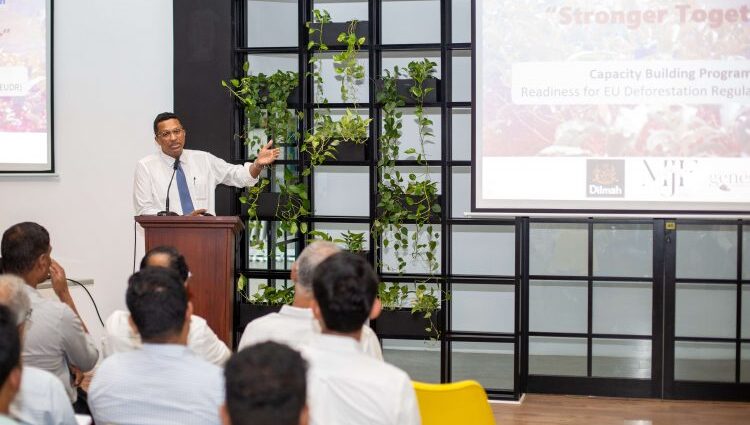
To embed sustainability across its supply network, Dilmah launched the Stronger Together initiative, a supplier sustainability roadmap designed to raise awareness and build capacity. This program supports suppliers in areas such as decarbonization, humanitarian action, and compliance with global sustainability requirements, while also providing targeted financial and technical assistance.
The initiative has unfolded in phases. In Phase 1, Dilmah convened a series of supplier conferences tailored to key supply chain segments. Sessions included a July 2023 engagement with packaging suppliers on sustainable packaging innovations, a December 2023 session with the tea sector on climate resilience and ethical labour practices, and a February 2025 forum with ingredient, logistics, and other partners to address global regulations and cross-cutting sustainability challenges.
Phase 2 – Stronger Together 2.0 builds on this foundation, focusing on implementation. It provides practical tools and training across ESG pillars, from carbon foot printing and waste management to human rights and anti-bribery practices. Training sessions also address compliance with emerging standards such as the new EU sustainability regulations. Suppliers are additionally supported with resources for decarbonization projects and humanitarian efforts, particularly in the tea sector. To foster transparency and peer learning, an online platform is being created where suppliers can interact and showcase their sustainability stories.
Recognition of Leadership
Dilmah’s commitment to sustainable supply chains has already earned international recognition. The company was named a finalist at the Reuters Global Sustainability Awards 2025 in the Net Zero: Supply Chain Decarbonization category, making it the only Sri Lankan brand recognized at this level. This acknowledgment reflects Dilmah’s ambitious, science-based climate commitments, validated by the Science Based Targets initiative (SBTi), and its leadership in driving supplier-level decarbonization.
Scaling Impact with Network Sri Lanka
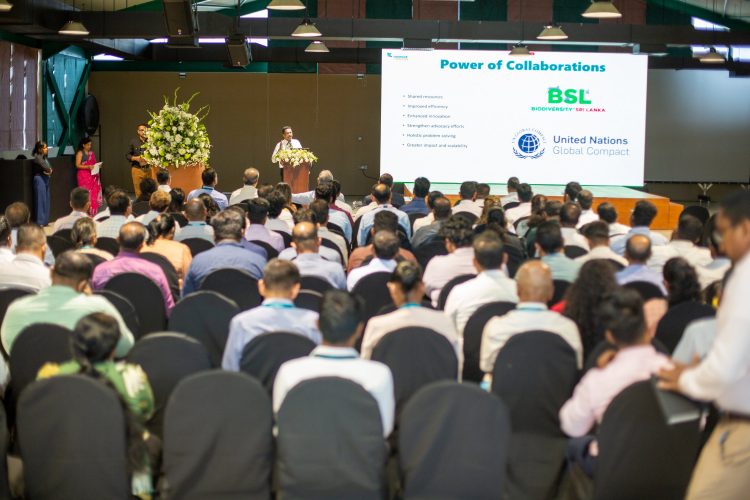
While Dilmah’s internal programmes set a high standard, the company’s ability to influence wider change is magnified through its collaboration with Network Sri Lanka. The Supply Chain Working Group provides a platform for collaboration, shared learning, and collective action, enabling Dilmah to align with global frameworks while strengthening local practice.
“Through Network Sri Lanka, we are not just advancing our own practices – we are part of a larger movement,” said Rishan. “The Network connects us with peers across industries, fosters shared learning, and helps us benchmark against global frameworks. That context is invaluable in ensuring our efforts have both local relevance and international credibility.”
By serving as Patron, Dilmah is helping to catalyze progress on responsible sourcing, human rights due diligence, and decarbonization into supply chains. Its vision is not only to raise the bar within its own operations but also to inspire and enable others to do the same.
The Road Ahead
Looking ahead, Dilmah is committed to building resilient and regenerative supply chains – ones that support farmer livelihoods, strengthen smallholder climate adaptation, and ensure dignity and fairness for workers at every stage. Integrating renewable energy, reducing waste, and scaling decarbonization efforts across the supply network remain priorities.
At the heart of this journey is the same principle that has always guided Dilmah: business must exist to serve humanity. By embedding that belief into the fabric of its supply chain – and by working with Network Sri Lanka to translate global principles into local impact – Dilmah is helping build supply chains that are ethical, transparent, and resilient. Through its actions, the company continues to uphold the Ten Principles of the UN Global Compact – from advancing human rights and fair labour practices to protecting the environment and fostering integrity in all business dealings – ensuring a future where commerce and compassion move hand in hand.
Source: Ada Derana Biz