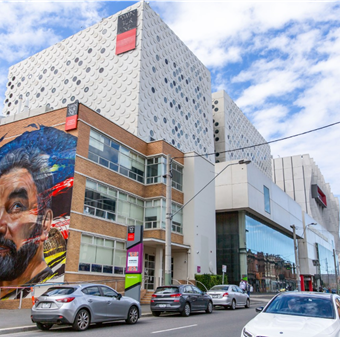
Swinburne University of Technology Australia recently reinforced its commitment to nurturing globally competitive talent by bringing a distinguished panel of academics from Australia to Sri Lanka, offering students valuable insights into emerging global opportunities and future career pathways. The visit brought together four leading academics representing key disciplines shaping the future of work such as business, health sciences, engineering, and information technology, each sharing perspectives on how education is evolving to meet rapid global change.
Leading the delegation was Prof. Lan Snell, Executive Dean of the School of Business, Law & Entrepreneurship, who highlighted how the pace of economic, geopolitical, and technological change is reshaping global business education. She emphasised that adaptability, global awareness, and industry relevance are now critical, with universities needing to integrate real-world application, digital capability, and critical thinking into their curricula to prepare graduates for increasingly complex environments.
From the healthcare domain, Prof. Rebecca Lane, Department Chair of Allied Health, School of Health Sciences, spoke on the growing complexity of global healthcare systems. She noted that health sciences education is becoming more technology-enabled and globally connected, with a strong focus on evidence-based practice, interprofessional collaboration, and hands-on learning. This approach ensures graduates are equipped to respond to evolving patient needs and healthcare systems both locally and internationally.
Addressing the future of infrastructure, Prof. Pat Rajeev, Department Chair of Civil & Construction Engineering, highlighted the increasing importance of sustainability and climate resilience in engineering. He explained that modern engineering education is embedding concepts such as renewable energy, sustainable materials, and systems thinking, while also strengthening industry engagement through real-world projects. This ensures graduates are prepared to design innovative, sustainable solutions for global challenges.
Meanwhile, Dr. Atie Kia, Lecturer in Computing Technologies, explored how rapid technological advancement, particularly in terms of artificial intelligence, is reshaping the future of work. She emphasised that computing education must move beyond tools to focus on critical thinking, adaptability, and ethical application of technology. By combining strong foundational skills with industry exposure, students are better prepared to navigate careers in fields that are continuously evolving.
Collectively, the sessions reinforced a central message that studying with Swinburne opens pathways that extend far beyond a single destination. While Australia remains a highly attractive education and career hub, graduates are increasingly finding opportunities across global markets, supported by internationally recognised qualifications and industry-relevant skills.
Swinburne’s approach to education, which blends academic excellence with strong industry integration, ensures that students are not only work-ready, but also adaptable to changing global demands. Through practical learning, industry engagement, and a focus on future-facing skills, graduates are well positioned to pursue careers across Asia, Europe, and beyond.
The visit also highlighted the university’s continued engagement with Sri Lanka, where students benefit from globally aligned education pathways that combine local accessibility with international mobility. As industries continue to evolve at pace, Swinburne’s message to Sri Lankan students is clear, the future is not confined by geography, and with the right education, global opportunities are within reach.
***********************************************
END